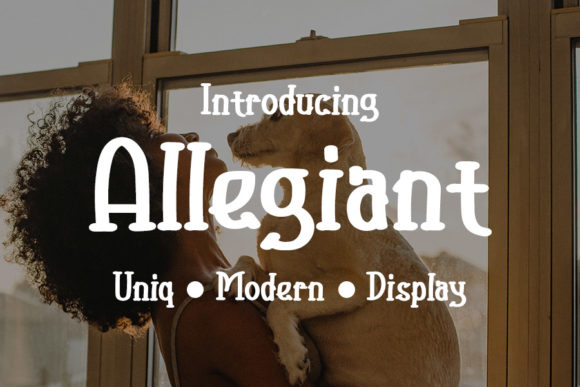
Allegiant: The Display Font for Modern Fashion & Editorial Design
In the world of visual communication, typography is rarely just about readability. While body text serves the functional purpose of conveying information clearly, display fonts serve an emotional one. They set the tone, establish authority, and create an immediate aesthetic impression before a single word is read. Among the vast library of typefaces available to designers today, Allegiant has emerged as a compelling choice for those seeking a balance between classic elegance and contemporary minimalism.
Allegiant is defined by its smooth curves and refined structure. It is not merely a font; it is a design statement. Whether you are crafting a brand identity for a boutique fashion label, laying out an editorial spread for a lifestyle magazine, or designing a minimalist poster, Allegiant offers the versatility to elevate your work. This article explores why this typeface stands out in a crowded market and how you can confidently integrate it into your creative projects.
Understanding the Anatomy of Allegiant
To appreciate the utility of any typeface, one must first understand its construction. Allegiant falls squarely into the category of modern sans-serif display fonts, but with distinct characteristics that separate it from utilitarian geometric types. Its defining feature is the fluidity of its lines. Unlike rigid, angular fonts that convey starkness or industrial strength, Allegiant relies on organic, sweeping curves that suggest movement and grace.
The letterforms are clean and uncluttered, avoiding unnecessary decorative elements while maintaining a high level of sophistication. This simplicity is what makes Allegiant so trendy right now. In an era where "less is more" often prevails in digital and print media, a font that communicates luxury through restraint is highly valuable. The smooth transitions between strokes give the letters a polished, almost liquid quality, which translates beautifully across different mediums.
For designers, this means that Allegiant can act as a silent partner in your layout. It does not shout for attention with erratic shapes or heavy weights; instead, it commands respect through its presence. This subtlety allows it to pair effectively with more complex textures, photography, or bold color palettes without creating visual chaos.
Ideal Applications in Fashion and Editorial Design
Given its aesthetic profile, Allegiant finds its natural home in industries where image and style are paramount. Fashion branding and editorial design are two areas where this font truly shines. Here is how you can apply it to maximize its potential.
Fashion Branding
When building a brand identity for a clothing line, accessory maker, or beauty product, the logo and primary typography need to reflect the brand’s personality. Allegiant is perfect for brands that want to project an image of effortless chic. Its smooth curves soften the message, making it feel approachable yet exclusive.
- Logo Design: Use Allegiant for wordmarks where legibility at small sizes is crucial, such as on garment tags or social media avatars. The clean lines ensure clarity even when scaled down.
- Packaging: For minimalist packaging, Allegiant adds a touch of premium quality. Consider using it in all-caps for a strong, confident look, or in title case for a softer, more inviting feel.
- Lookbooks: When pairing text with high-fashion photography, Allegiant’s neutral elegance ensures that the typography complements the images rather than competing with them.
Editorial Layouts
In magazine layouts, blog headers, or digital newsletters, the hierarchy of information is critical. Allegiant works exceptionally well as a headline font. Its distinctive character draws the eye immediately, guiding the reader into the content. Because it is a display font, it should be used sparingly for impact rather than for long-form reading.
Imagine a travel blog featuring stunning landscapes. A large, bold header set in Allegiant can evoke the feeling of freedom and flow associated with travel. Alternatively, in a tech-focused publication, Allegiant can bring a humanizing touch to otherwise dry technical articles, bridging the gap between innovation and lifestyle.
Practical Tips for Using Allegiant Effectively
While Allegiant is a powerful tool, like any typeface, it requires thoughtful application to achieve the best results. Here are some practical guidelines to help you keep your designs clear, organized, and visually appealing.
Maintain Hierarchy and Contrast
One common mistake designers make is using display fonts for body text. Avoid this. Allegiant is designed to be read at larger sizes. For paragraphs and longer texts, pair it with a highly readable serif or sans-serif font. This contrast creates a professional rhythm in your design, allowing the eye to rest on the headlines while navigating the details with ease.
Use weight variations if available. If your version of Allegiant includes multiple weights (Light, Regular, Bold), use them to create depth. A light weight can convey delicacy, while a bold weight provides structural anchor points in your layout.
Consider Spacing and Kerning
Because Allegiant features smooth curves, the negative space around each letter is part of its charm. Pay close attention to kerning (the spacing between individual characters) and tracking (the overall spacing of a block of text). Tighter tracking can create a solid, unified block of text suitable for short phrases or logos, while wider tracking can add an air of luxury and breathability, especially in all-caps settings.
Color and Texture Pairings
Allegiant’s neutrality makes it adaptable to various color schemes. However, it particularly excels in monochromatic or pastel palettes, where the focus remains on form and shape. Try placing Allegiant over textured backgrounds, such as paper grain or soft gradients, to enhance its tactile appeal. Conversely, on solid, vibrant colors, it will pop with graphic intensity.
Expanding Creative Possibilities
Beyond traditional fashion and editorial uses, Allegiant opens doors to other creative avenues. Freelancers and hobbyists can leverage its aesthetic for personal branding, such as resume headers or portfolio covers. Educators might find it useful for creating engaging presentation slides where clarity meets style.
Small business owners, particularly those in the artisanal or handmade sectors, can use Allegiant to communicate craftsmanship and care. The smooth curves mirror the handcrafted nature of many products, reinforcing the brand story subconsciously. For bloggers and publishers, incorporating Allegiant into custom graphics or quote cards can increase shareability on social media platforms, where visual appeal drives engagement.
Why You Should Add Allegiant to Your Toolkit
The decision to adopt a new typeface should always be driven by utility and aesthetic alignment. Allegiant offers a rare combination of trendiness and timelessness. It feels current due to its modern, clean lines, yet it possesses a classic elegance that prevents it from looking dated in a few years. This longevity makes it a smart investment for any designer’s toolkit.
Adding Allegiant to your projects is a low-risk, high-reward move. Its ability to adapt to various contexts—from digital screens to print materials—ensures versatility. Moreover, its friendly yet sophisticated vibe resonates with a broad audience, making it suitable for diverse client bases.
As you experiment with Allegiant, remember that confidence is key. Trust the simplicity of the design. Let the smooth curves speak for themselves. By integrating this font with intention and care, you will likely find that your designs gain a new level of polish and professionalism. Whether you are rebranding a business or simply updating your blog’s aesthetic, Allegiant provides the perfect foundation for creating work that is both beautiful and effective.
Start small. Try setting a single headline in Allegiant and observe how it changes the mood of the page. Then, expand your usage to include subheads and call-to-action buttons. As you become more familiar with its nuances, you will discover new ways to utilize its unique character. The results will speak for themselves, proving that sometimes, the simplest choices yield the most profound impacts.