Hammurabi Font Evaluation
In the expansive ecosystem of digital typography, selecting the right typeface is often a balance between aesthetic appeal and functional clarity. For designers and developers seeking a display font that commands attention without sacrificing readability, Hammurabi presents a compelling option. This unique and interesting display font offers a distinct visual character that sets it apart from more conventional sans-serif or serif options. While it may not serve as a primary body text solution for dense reading material, its specific design traits make it a versatile tool for various creative contexts.
Understanding Hammurabi’s Design Identity
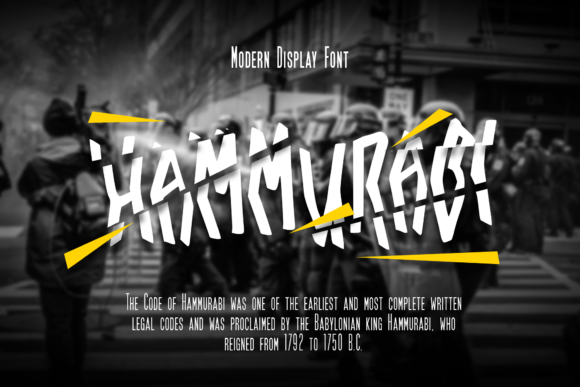
To evaluate whether Hammurabi fits your project, one must first understand its structural DNA. The font is characterized by a slightly quirky personality, achieved through subtle irregularities in its stroke weight and geometric construction. Unlike rigid, mathematically perfect geometric sans-serifs, Hammurabi introduces organic variations that give it a hand-crafted feel, even though it is a digital typeface. These quirks are not errors; they are deliberate design choices intended to evoke a sense of history and craftsmanship.
The name itself suggests a connection to ancient codes and legal structures, hinting at a robust, authoritative presence. However, the actual visual execution softens this authority with a modern, approachable twist. The letterforms feature clean lines but are punctuated by unique details—such as the terminals on letters like 'e' and 'a'—that prevent the font from feeling sterile. This blend of structure and whimsy is what makes Hammurabi a great choice for a wide variety of contexts where standard fonts might fall flat.
Primary Use Cases and Strong Fits
Hammurabi shines brightest in applications where hierarchy and visual impact are paramount. Because it is a display font, it is optimized for short bursts of text rather than long paragraphs. Here are several scenarios where Hammurabi proves to be a strong fit:
- Branding and Logos: The distinctive quirks of Hammurabi make it an excellent candidate for logo design. It can convey reliability while simultaneously suggesting creativity, a combination that is highly valued in modern branding.
- Headlines and Titles: On websites and digital publications, Hammurabi can effectively capture user attention. Its unique shape ensures that headlines stand out against more common typefaces like Helvetica or Arial, helping content cut through the noise.
- Event Posters and Flyers: For events that require a tone of sophistication mixed with approachability, such as art exhibitions, music festivals, or corporate conferences, Hammurabi provides the necessary visual weight without being overly aggressive.
- Packaging Design: In consumer goods, shelf presence is critical. Hammurabi’s textured appearance can add tactile quality to digital mockups, making packaging designs feel more premium and thoughtfully designed.
Benefits and Tradeoffs
Evaluating any typeface requires a balanced look at its advantages and limitations. Hammurabi offers several benefits that justify its selection for specific projects, but it also comes with tradeoffs that designers must manage.
The Benefits
The primary benefit of Hammurabi is its versatility within the display category. It avoids the extreme novelty of some decorative fonts, which limits their usability. Instead, it occupies a middle ground that allows it to pair well with a wide range of complementary fonts. Additionally, its quirky nature adds personality to otherwise mundane layouts, injecting life into static designs without requiring additional graphical elements.
Another advantage is its legibility at larger sizes. Despite its stylistic variations, Hammurabi maintains clear character distinction, ensuring that users can read headings quickly and accurately. This is crucial for user experience (UX) design, where cognitive load must be minimized.
The Tradeoffs
The most significant limitation of Hammurabi is its unsuitability for body text. At small sizes, the quirks that give the font its character can become distractions or reduce readability. The slight irregularities in stroke width may cause pixelation or blurring on lower-resolution screens if not rendered correctly. Therefore, using Hammurabi for long-form content is generally discouraged.
Furthermore, because the font has a distinct personality, it can clash with other design elements if not paired carefully. It does not recede into the background like neutral sans-serifs do; it demands attention. If the goal is to create a minimalist, invisible interface, Hammurabi may be too dominant.
Practical Decision-Making Insights
When deciding whether to incorporate Hammurabi into your workflow, consider the following practical insights to ensure alignment with your goals.
- Assess the Hierarchy: Determine if you need a font for emphasis. If you are designing a landing page, use Hammurabi for the main headline and subheads, but pair it with a highly readable sans-serif or serif font for the body copy. This contrast creates a professional and polished look.
- Consider the Brand Voice: Does your brand value tradition, authority, and craftsmanship? Or does it prioritize speed, neutrality, and efficiency? Hammurabi leans toward the former. If your brand is tech-forward and ultra-minimalist, alternatives like Inter or Roboto might be more appropriate.
- Test for Scalability: Before finalizing your design, test Hammurabi at various sizes and resolutions. Ensure that the quirky details remain crisp and do not degrade the overall aesthetic. Pay special attention to how it renders on mobile devices, where screen real estate and resolution vary widely.
- Evaluate Pairing Options: Experiment with pairing Hammurabi with different typefaces. It often pairs well with simple, geometric sans-serifs that provide a stable foundation for its more expressive characters. Avoid pairing it with other decorative fonts, as this can create visual chaos.
When to Consider Alternatives
While Hammurabi is a strong contender in the display font market, it is not a universal solution. There are situations where exploring alternatives may yield better results.
If your project involves heavy text density, such as an e-book, a news article, or a technical manual, you should prioritize fonts designed specifically for high legibility over extended periods. In these cases, fonts like Georgia, Merriweather, or Open Sans will serve your audience better than Hammurabi.
Additionally, if you are working on a global project that requires extensive language support, you must verify that Hammurabi includes the necessary character sets for all target languages. Some unique display fonts have limited glyph coverage, which can restrict their international applicability. Always check the font’s documentation for comprehensive Unicode support before committing to it for multilingual designs.
Conclusion
Hammurabi stands out as a unique and interesting display font that brings a touch of quirkiness and character to typographic design. It is a great choice for a wide variety of contexts where visual impact and personality are desired. By understanding its strengths in display applications and acknowledging its limitations in body text, designers can make informed decisions that enhance their projects. Whether used for branding, headlines, or packaging, Hammurabi offers a distinctive voice that can elevate a design from ordinary to memorable. As with any typographic choice, the key lies in thoughtful application and careful consideration of the overall design context.