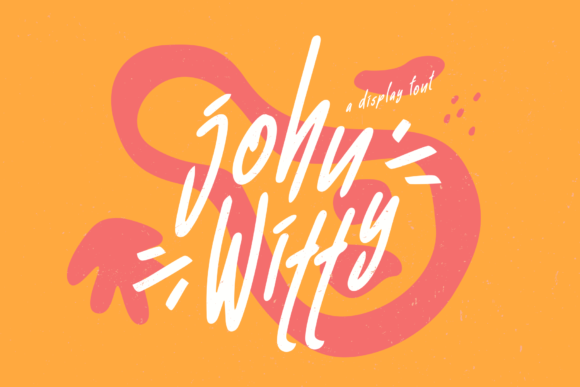
John Witty: The Bold Choice for Eye-Catching Typography
In the fast-paced world of visual communication, capturing attention within the first few seconds is not just an advantage—it is a necessity. Whether you are designing a concert poster, a social media banner, or a high-end fashion flyer, the right typeface can make the difference between a forgotten image and a memorable brand moment. This is where John Witty steps into the spotlight. As a cool and trendy display font, it has carved out a niche for itself among designers who prioritize impact, personality, and visual flair.
But what exactly makes John Witty stand out in a sea of generic sans-serifs and classic serifs? Is it merely a stylistic choice, or does it offer functional value to your design projects? In this guide, we will explore the characteristics, applications, and practical considerations of using John Witty in your creative workflow. By understanding its strengths and limitations, you can harness its potential to create stunning visuals that resonate with your audience.
Understanding the Aesthetic of John Witty
To appreciate John Witty, one must first understand the concept of a "display font." Unlike body text fonts, which are designed for readability over long passages, display fonts are intended to be seen from a distance or at large sizes. They are the headline act, not the supporting cast. John Witty fits squarely into this category, offering a distinct personality that commands attention.
The font is characterized by its modern, edgy aesthetic. It combines clean lines with playful irregularities, creating a look that feels both contemporary and slightly rebellious. This duality is what makes it so versatile. On one hand, it retains enough structure to feel professional; on the other, it possesses enough character to avoid looking sterile or corporate. When you use John Witty for your designs, you are immediately signaling that your project is bold, confident, and unafraid to stand out.
One of the most striking features of John Witty is its weight distribution. The letters often feature thick, substantial strokes that provide a sense of stability and presence. Yet, these heavy forms are balanced by subtle curves and unique terminal points that add a touch of elegance. This balance ensures that the font remains legible even when scaled up to massive proportions, a critical factor for posters and flyers where readability from a distance is paramount.
Key Characteristics That Define the Font
- High Contrast: The interplay between thick and thin elements creates visual interest without sacrificing clarity.
- Modern Geometry: The underlying structure is rooted in geometric principles, giving it a clean, contemporary feel.
- Playful Details: Small quirks in the letterforms, such as angled cuts or rounded corners, add personality and prevent the design from feeling too rigid.
- Versatile Weight: Available in various weights, allowing for dynamic hierarchy within a single design piece.
Where John Witty Shines: Real-World Applications
Knowing the features of a font is useful, but knowing where to apply them is where true expertise lies. John Witty is not a one-size-fits-all solution, but rather a specialized tool for specific scenarios. Its cool and trendy vibe makes it particularly effective in industries that rely on energy, creativity, and youth culture.
Event Posters and Flyers
If you have ever walked past a stack of flyers for a local music festival, art exhibition, or club night, you likely noticed the bold typography used to grab passersby. John Witty is an ideal candidate for these materials. Its ability to render large headlines with maximum impact means that your event details will be impossible to ignore. Imagine a black-and-white poster with "SUMMER FEST" in massive John Witty letters—the contrast between the stark background and the heavy, textured font creates an immediate visual hook.
Moreover, the font’s trendy nature aligns well with the aesthetics of modern events. It suggests that the event is current, exciting, and worth attending. For business owners organizing launch parties or product reveals, using John Witty signals innovation and forward-thinking.
Social Media Graphics
In the digital realm, scrolling users give content mere milliseconds to decide whether to stop and engage. Display fonts like John Witty are perfect for Instagram stories, Facebook covers, and YouTube thumbnails. Because these platforms are highly visual, text needs to act as a graphic element itself. John Witty allows creators to turn words into images, making quotes, announcements, or promotional offers pop off the screen.
For example, a fitness influencer might use John Witty to overlay motivational quotes on action shots. The strength of the font mirrors the intensity of the workout, reinforcing the message through visual psychology. Similarly, food bloggers can use it for recipe titles, adding a fun and appetizing vibe to their culinary creations.
Brand Identity and Packaging
While less common for full brand logos due to its distinctive style, John Witty can be a powerful accent font for brands seeking a youthful or edgy identity. Think of streetwear labels, craft breweries, or boutique coffee shops. Using John Witty for packaging tags, limited-edition labels, or promotional stickers can instantly elevate the perceived value of the product. It adds a layer of sophistication mixed with casual coolness, appealing directly to consumers who value authenticity and style.
Evaluating Suitability: Who Should Use John Witty?
Not every designer or business owner should reach for John Witty in every project. Understanding your audience and the tone of your message is crucial. This font is best suited for:
- Creative Professionals: Graphic designers, illustrators, and art directors who need a font that adds immediate character to their compositions.
- Marketing Teams: Those tasked with creating eye-catching advertisements, banners, and social media content that needs to cut through the noise.
- Small Business Owners: Entrepreneurs in creative industries who want to establish a strong, memorable visual presence without hiring expensive branding agencies.
- Hobbyists and Enthusiasts: Individuals creating personal projects, such as wedding invitations with a modern twist, party decorations, or DIY crafts.
Conversely, if you are designing legal documents, academic papers, or lengthy web articles, John Witty is likely inappropriate. Its decorative nature can hinder readability in small sizes or dense text blocks. Always reserve display fonts for headlines, titles, and short phrases where their impact can be fully appreciated.
Practical Tips for Using John Witty Effectively
To get the most out of this font, consider the following best practices:
- Pairing Matters: Since John Witty is a statement font, pair it with a simple, neutral sans-serif or serif for body text. This contrast ensures that your message is both stylish and readable.
- Use White Space: Give the letters room to breathe. Cluttered designs can overwhelm the unique shapes of John Witty. Ample negative space enhances its modern aesthetic.
- Experiment with Color: The font’s bold nature pairs well with vibrant colors or high-contrast monochromatic schemes. Don’t be afraid to experiment with gradients or textured fills.
- Scale Appropriately: Remember that John Witty is a display font. Keep it large. If you find yourself reducing the size to fit more text, you may be using the wrong typeface for that context.
Limitations and Considerations
No font is perfect, and John Witty is no exception. One limitation to keep in mind is its specificity. Because it has such a strong personality, it can clash with other design elements if not handled carefully. For instance, pairing it with overly ornate backgrounds or conflicting fonts can result in a chaotic and unprofessional look.
Additionally, availability and licensing can vary. While many online resources offer John Witty for download, always verify the license terms before using it for commercial purposes. Some fonts are free for personal use only, while others require a paid license for business applications. Ensuring you have the proper rights protects your project from legal issues and supports the designers who created the typeface.
Another consideration is cultural context. The "cool and trendy" vibe of John Witty resonates strongly with Western, urban audiences. If you are targeting markets with different aesthetic preferences, it is essential to test how the font translates culturally. What reads as "modern" in one region might read as "aggressive" or "informal" in another.
Conclusion: Embracing the Power of Personality
In conclusion, John Witty is more than just a collection of letters; it is a tool for expression. Its cool and trendy design makes it a standout choice for any project that demands attention. From posters and flyers to social media graphics and packaging, this font offers endless possibilities for creators looking to inject energy and style into their work.
By understanding its characteristics and applying it strategically, you can leverage the power of John Witty to communicate your message effectively. Whether you are a seasoned professional or a budding creator, experimenting with this font can open up new avenues for creativity. So, go ahead—use this font for your designs, explore its endless possibilities, and watch as your visuals transform from ordinary to extraordinary. In a world saturated with content, let John Witty be the voice that stands out.