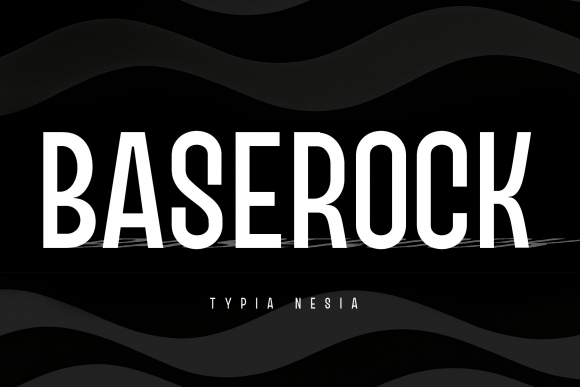
Unlocking Visual Impact: Why Baserock Is the Ultimate Choice for Modern Design
In the ever-evolving landscape of graphic design and digital typography, finding a typeface that strikes the perfect balance between elegance, readability, and modern appeal can feel like searching for a needle in a haystack. Designers are constantly on the hunt for fonts that not only look good but also communicate the right message without shouting. Enter Baserock, a display font that has rapidly gained traction among creative professionals who value clarity, sharpness, and sophistication. This article explores what makes Baserock unique, why it stands out in a crowded market, and how you can leverage its potential to elevate your next project.
Understanding the Essence of Baserock
To truly appreciate Baserock, one must first understand the philosophy behind its creation. It is not merely a collection of letters; it is a carefully crafted visual language designed to inspire. The font is characterized by its clean lines, simple geometry, and sharp angles. Unlike overly ornate or decorative typefaces that demand attention through complexity, Baserock commands respect through precision. Its aesthetic is reminiscent of mid-century modernism meets contemporary minimalism, making it versatile enough for a wide array of applications.
The "display" classification of Baserock means it is optimized for use at larger sizes. Whether it’s a headline on a website, a logo for a startup, or text on a billboard, Baserock maintains its integrity and legibility. This distinction is crucial because many fonts lose their character when scaled up or down. Baserock, however, remains sharp and defined regardless of the context, ensuring that your message is always delivered with impact.
The Psychology of Clean Design
Why does simplicity matter so much in typography? Research in cognitive psychology suggests that humans process clean, uncluttered visuals faster and more comfortably than complex ones. In an age where users are bombarded with information from every angle, a clean font like Baserock acts as a visual respite. It reduces cognitive load, allowing the viewer to focus on the content rather than struggling to decipher the form.
Baserock embodies this principle. Its lack of unnecessary flourishes allows the shape of the letters to speak for themselves. This transparency creates a sense of trust and professionalism. When a brand uses Baserock, it subconsciously signals to the audience that they value clarity, efficiency, and high standards. For businesses looking to establish authority in competitive markets, choosing a font that exudes confidence and stability is a strategic move.
Key Characteristics That Define Baserock
- Geometric Precision: The curves and straight lines in Baserock are mathematically balanced, giving it a structured yet approachable feel.
- High Contrast Potential: Because of its sharp edges, Baserock pairs exceptionally well with softer, serif fonts, creating dynamic visual hierarchies.
- Versatile Weight Options: Depending on the specific release, Baserock often comes in various weights, allowing designers to create emphasis without changing typefaces.
- Modern Aesthetic: It avoids trends that date quickly, ensuring that designs using Baserock remain relevant for years to come.
Practical Applications in Modern Design
One of the most compelling aspects of Baserock is its adaptability. While it shines as a display font, its utility extends far beyond just big headlines. Here are several ways designers and marketers can integrate Baserock into their workflows to explore its endless possibilities.
Branding and Identity
In the realm of branding, first impressions are everything. A logo needs to be memorable, scalable, and distinctive. Baserock’s sharp look provides a strong foundation for logo design, particularly for tech companies, architectural firms, fashion brands, and luxury goods. The font’s inherent sleekness conveys innovation and premium quality. Imagine a fintech app using Baserock for its interface headers; the font would reinforce the idea of secure, precise, and forward-thinking financial services.
Digital Interfaces and Web Design
As screen real estate becomes increasingly valuable, readability is paramount. Baserock’s clean structure ensures that text remains legible even on smaller mobile devices. Web designers can use Baserock for navigation menus, call-to-action buttons, and hero sections. Its simplicity ensures that it doesn’t compete with images or other content but rather complements them, guiding the user’s eye naturally through the page layout.
Print Media and Editorial
Don’t overlook the power of print. Magazines, brochures, and business cards benefit greatly from the tactile quality that a well-designed font brings. When printed on high-quality paper, Baserock’s sharp edges take on a physical presence that adds weight to the message. It is particularly effective for cover stories, pull quotes, and section dividers where visual breaks are needed to maintain reader engagement.
Maximizing Creativity with Baserock
To truly harness the power of Baserock, designers should think beyond standard usage. Here are some advanced techniques to explore its potential:
- Mixing Weights: Use a bold version of Baserock for main headlines and a lighter weight for subheadings. This contrast creates depth and guides the reader through the hierarchy of information.
- Kerning Adjustments: Experiment with wider kerning (spacing between letters) to create a luxurious, airy feel, especially for short words or single-letter logos. Conversely, tight kerning can create a dense, impactful block of text for posters.
- Pairing with Serifs: Combine Baserock with a classic serif font like Garamond or Playfair Display. The juxtaposition of modern sans-serif sharpness against traditional serif elegance creates a sophisticated, editorial look that is highly trendy in current design circles.
- Color Blocking: Use Baserock in conjunction with bold color blocks. The font’s neutrality allows it to blend seamlessly into vibrant backgrounds while still maintaining its structural integrity.
Common Misconceptions About Display Fonts
A frequent misunderstanding among beginners is that display fonts are only for decoration and have no functional role. This is far from the truth. A well-chosen display font like Baserock serves a critical communicative function. It sets the tone before a single word is read. If the font is chaotic or hard to read, the message is lost. If it is clear and inspiring, as Baserock aims to be, the message is amplified.
Another misconception is that simple fonts are boring. Simplicity is not synonymous with blandness. Baserock proves that restraint can be powerful. By stripping away excess detail, the font forces the designer to focus on composition, spacing, and content. It challenges the designer to make every element count, resulting in more thoughtful and impactful work.
Conclusion: Elevate Your Work with Baserock
In conclusion, Baserock is more than just a font; it is a tool for inspiration. Its clean, simple, and sharp appearance makes it an invaluable asset for any designer looking to create work that resonates with modern audiences. Whether you are designing a brand identity, a website, or a print campaign, Baserock offers the versatility and sophistication needed to stand out in a noisy world.
We encourage you to download Baserock and experiment with it in your own projects. Explore its geometric beauty, play with its weights, and discover how its minimalist charm can transform your designs. By choosing Baserock, you are not just selecting a typeface; you are committing to a standard of clarity and excellence that will truly inspire your works and captivate your audience.
Explore Baserock Font Family today and start creating designs that leave a lasting impression.